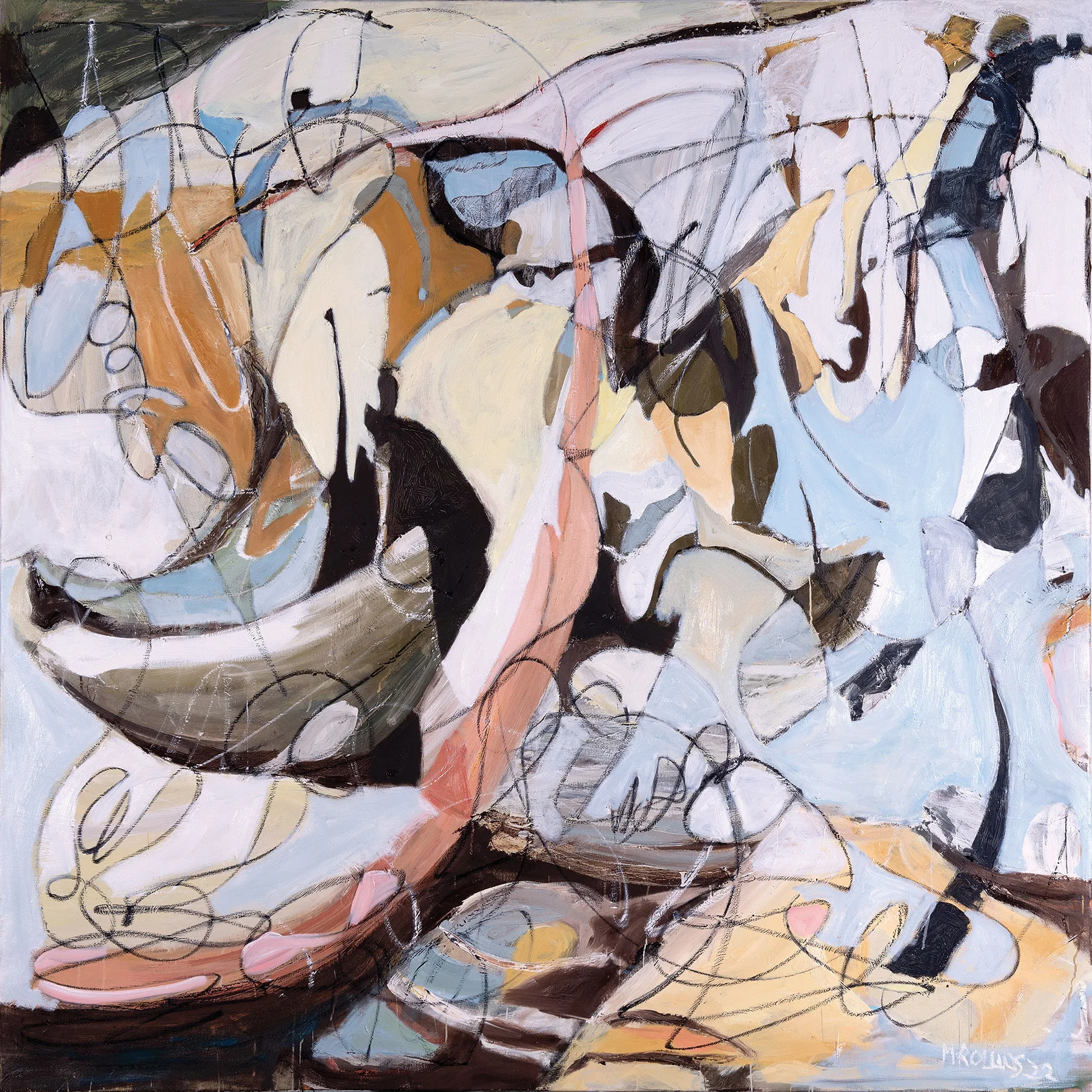
An artwork need not choose a single emotional register. A luminous color can meet a rough abrasion; an expansive gesture can surround an intimate cluster of marks. These conditions do not necessarily cancel one another. Their coexistence may be the very source of the work’s intensity.
The challenge for the viewer is to resist tidying that complexity too quickly. Calling a painting joyful may overlook its pressure. Calling it troubled may miss the pleasure of its color. Description becomes more useful when it allows several observations to remain in conversation without forcing them into one summary.
Try making two statements about a work that seem initially incompatible. Locate the visible evidence for each, then examine where they meet. The exercise encourages a more precise encounter with abstraction. Instead of asking an image to confirm one feeling, we can allow it to give form to a less settled experience.