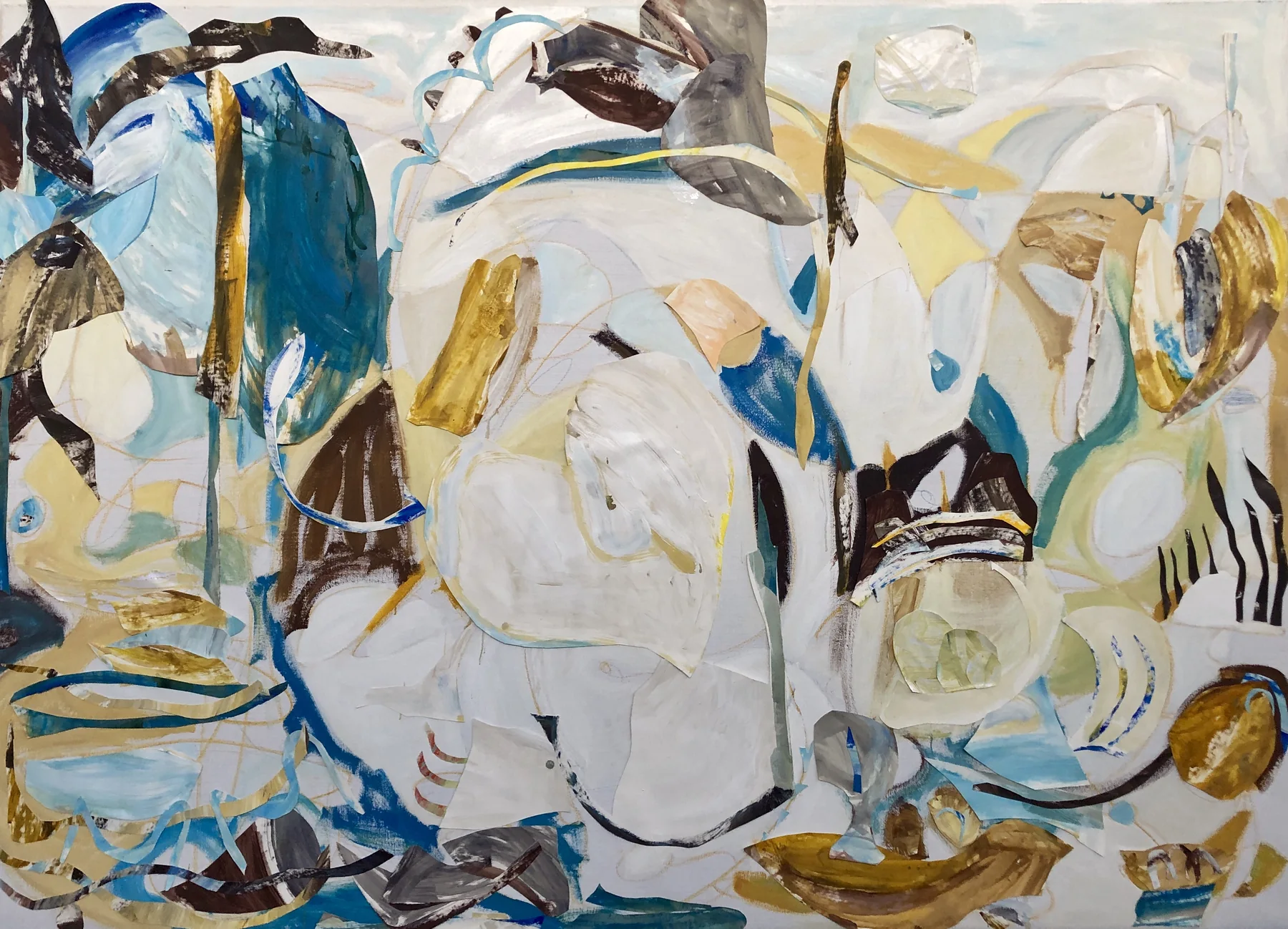
A balanced composition does not require matching halves. A small, intense accent can answer a broad muted field. A dense cluster near one edge can be held by a long open interval elsewhere. The relationship depends on visual weight, which is produced by contrast, texture, direction, and placement as well as size.
Asymmetry keeps the viewer involved because equilibrium must be felt across differences. The eye compares unlike elements and tests how they hold together. A composition may seem close to tipping without actually losing coherence, creating an energy that a more evenly distributed arrangement might soften.
Try dividing a work mentally through its center, then compare the two sides without counting objects. Which areas feel heavier, brighter, or more insistent? Look for the less obvious element that answers that weight. Balance often emerges through a relationship across distance rather than through resemblance.