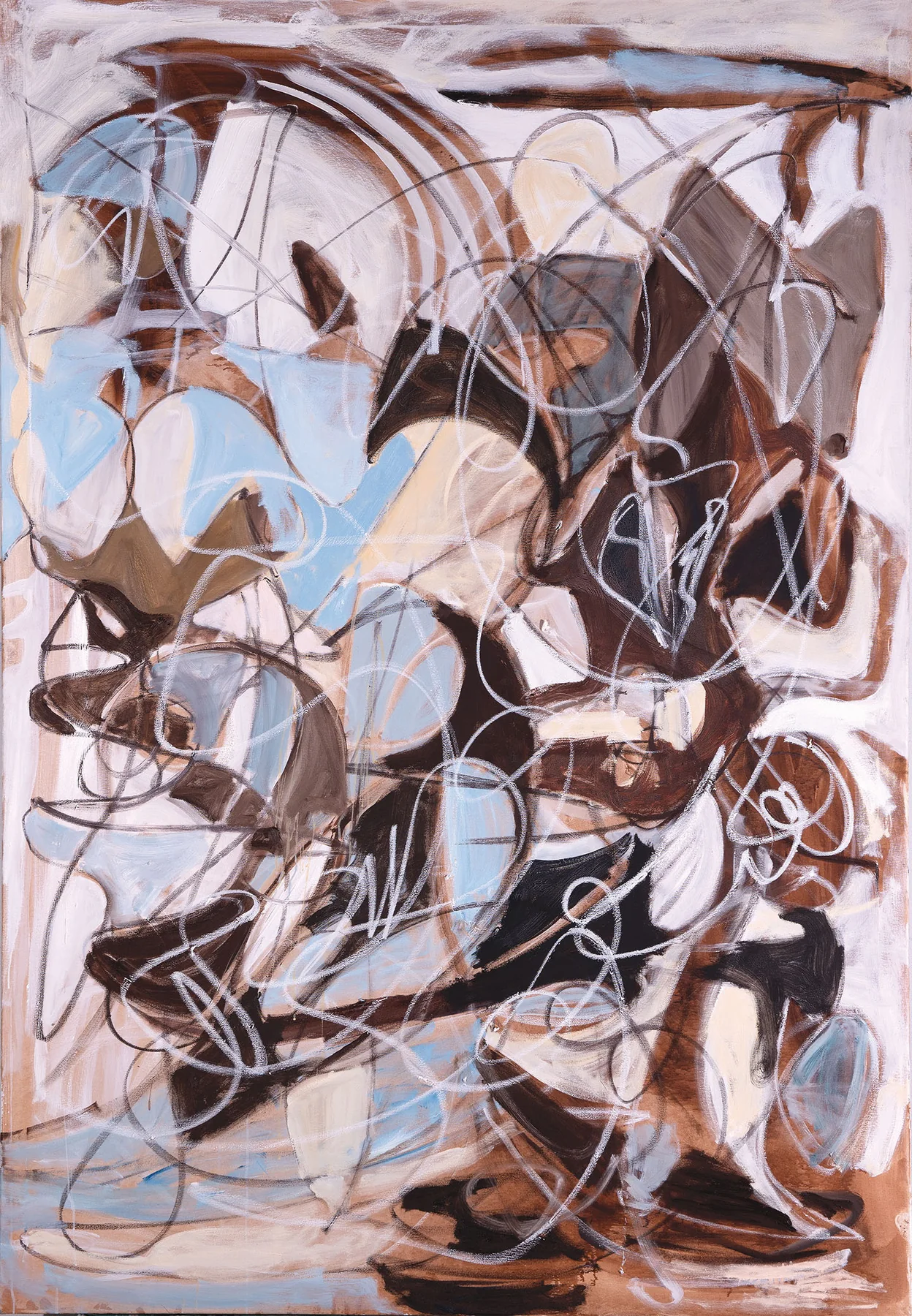
Caregiving is composed of repeated acts whose importance often exceeds their visibility. Preparing, lifting, listening, waiting, soothing, organizing, and returning can structure a life while leaving little conventional record. Art can make that emotional labor perceptible without turning it into a simple illustration.
In abstraction, care may appear through rhythm and accumulation. Layers suggest days placed upon days. Bound or stitched materials evoke holding together. A forceful gesture meets a delicate fabric edge. Beauty exists beside strain, and neither cancels the other. This complexity is closer to lived experience than a single heroic image.
The idea of endurance is equally nuanced. Endurance does not mean remaining unchanged. It can involve adaptation, fracture, repair, anger, tenderness, and the recognition of limits. A painting that contains incompatible energies may offer a more honest account of resilience than one that presents harmony without conflict.
When artists address caregiving, they also challenge the cultural tendency to separate private life from serious public meaning. The home, the family, the dependent body, and the daily act of sustaining another person are not minor themes. They are fundamental structures through which societies reproduce themselves and through which individuals encounter love, obligation, and mortality.