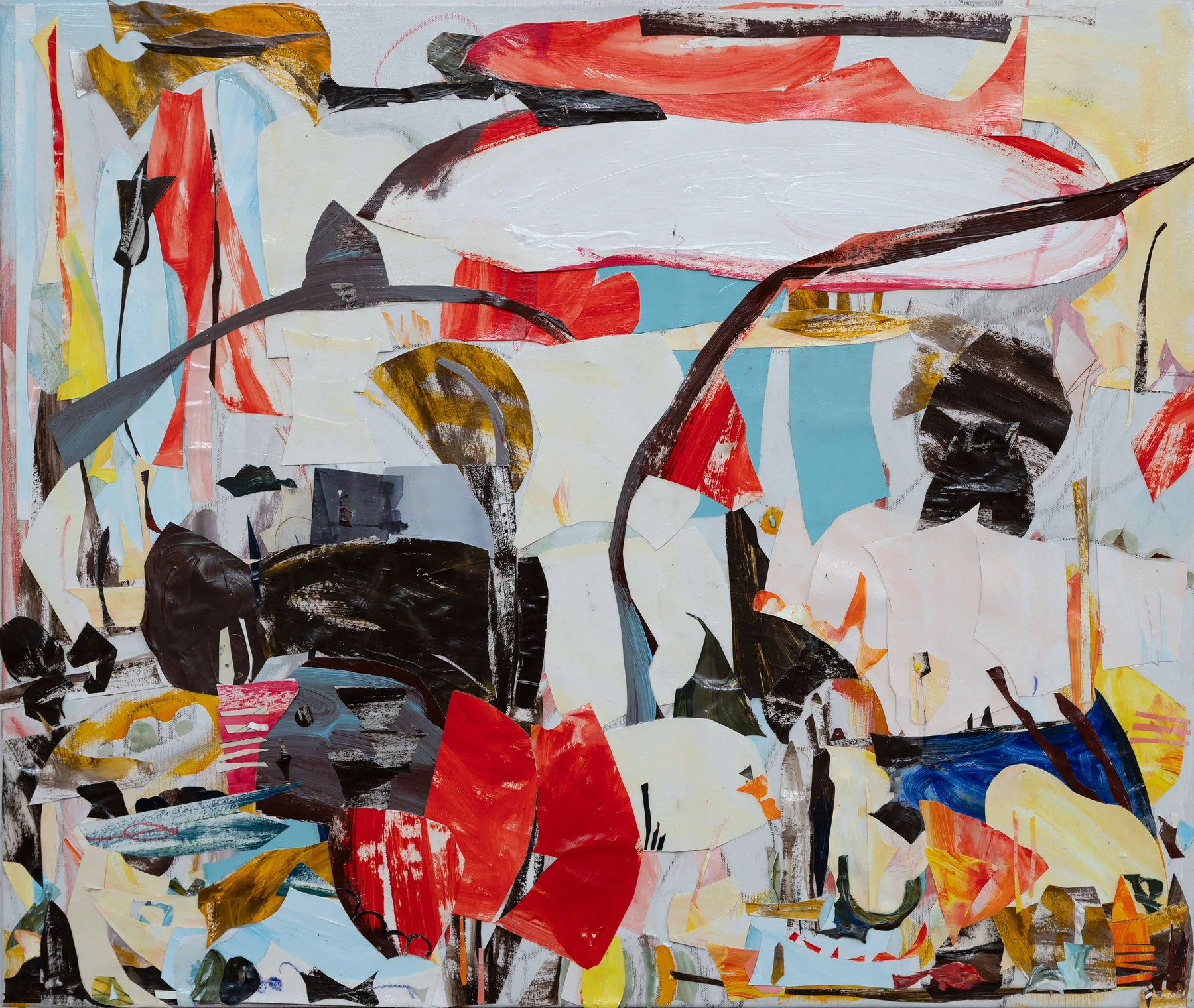
Collage begins with a radical permission: an image or material does not have to remain where it began. It can be cut from one context, placed into another, partially covered, or joined to something apparently incompatible. This mobility makes collage especially suited to a world experienced through fragments.
The process is both constructive and destructive. Cutting separates; arranging builds. Adhesion fixes a temporary decision, yet the edges preserve evidence of rupture. Even a harmonious composition contains the memory of displacement. That tension gives collage its distinctive psychological charge.
When artists paint their own collage papers, the medium moves beyond found imagery. Each fragment carries brushwork, tonal variation, and a history of preparation before it enters the final composition. Drawing can pass over and under attached elements, binding separate layers into a continuous field.
Collage offers a compelling analogy for memory. We do not recall the past as an unbroken recording. We select, compress, rearrange, lose, and rediscover. A layered artwork can therefore feel truthful without being literal: it resembles the structure of remembering rather than the appearance of a remembered scene.