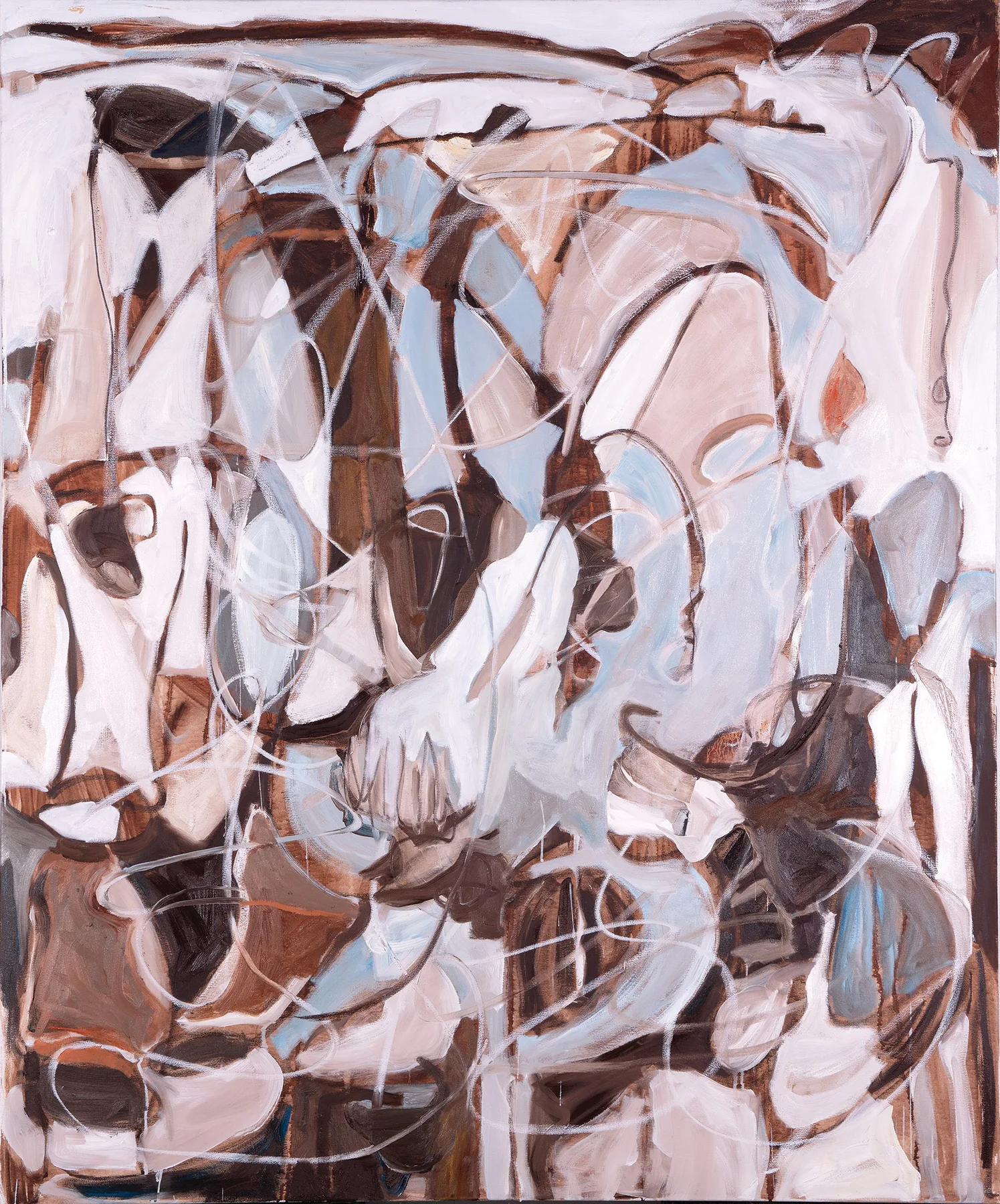
A dark area often reads as a single mass on first encounter. Stay with it a little longer and it may divide into a blue-black, a warmer brown, and a narrow area of reflected light. A thin patch can seem surprisingly open beside a denser color even though both initially looked nearly black.
These distinctions give depth to the quietest part of the composition. Look at where dark meets dark before comparing the passage with the brightest color in the work. The small differences are easier to notice without that larger contrast constantly pulling you away. A strong dark field can hold considerable variation at a low volume.