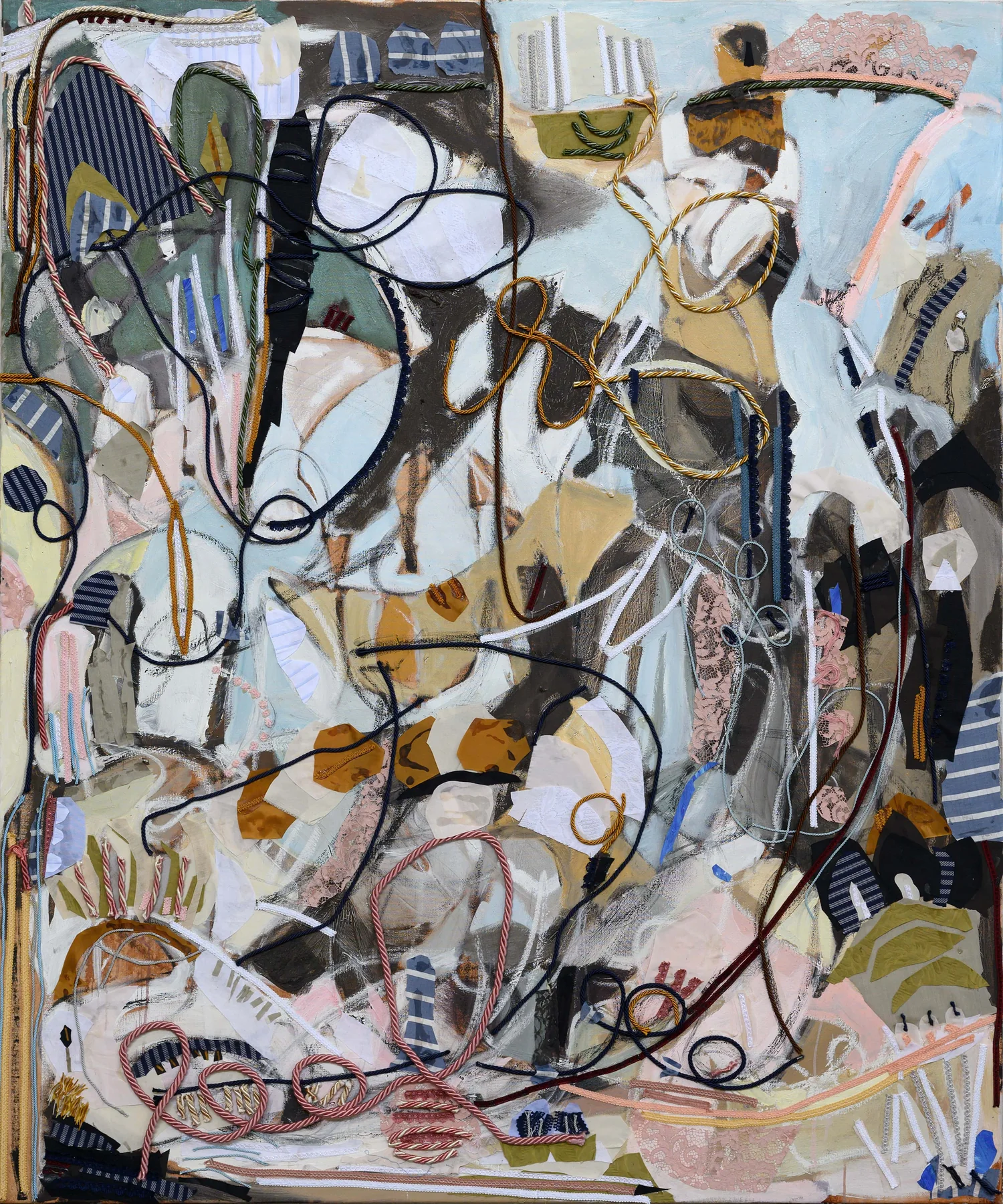
Fabric changes the physical and emotional register of a painting. Unlike a brushstroke, cloth arrives with a prior life: it has been woven, folded, stretched, worn, stored, cut, or repaired. Even when the material is new, its structure carries associations with clothing, domestic space, ceremony, care, and the body.
When fiber is attached to canvas, it refuses the fiction that a painting is only an image. Threads cast shadows. Frayed edges move with air. Dense cloth absorbs pigment differently from smooth primed canvas. The work occupies the viewer’s space and asks to be understood through imagined touch as well as sight.
Textile also complicates the traditional hierarchy between fine art and forms of labor historically associated with women. Sewing, mending, quilting, and weaving contain sophisticated systems of color, geometry, and storytelling. Contemporary artists who bring these materials into painting do more than borrow a texture; they make visible knowledge that museums once treated as secondary.
The most compelling fabric paintings allow material and image to transform one another. Cloth does not simply illustrate softness, and paint does not merely cover it. Tension develops between pliability and structure, intimacy and monumentality, vulnerability and force. The result is a surface that behaves like both skin and architecture.