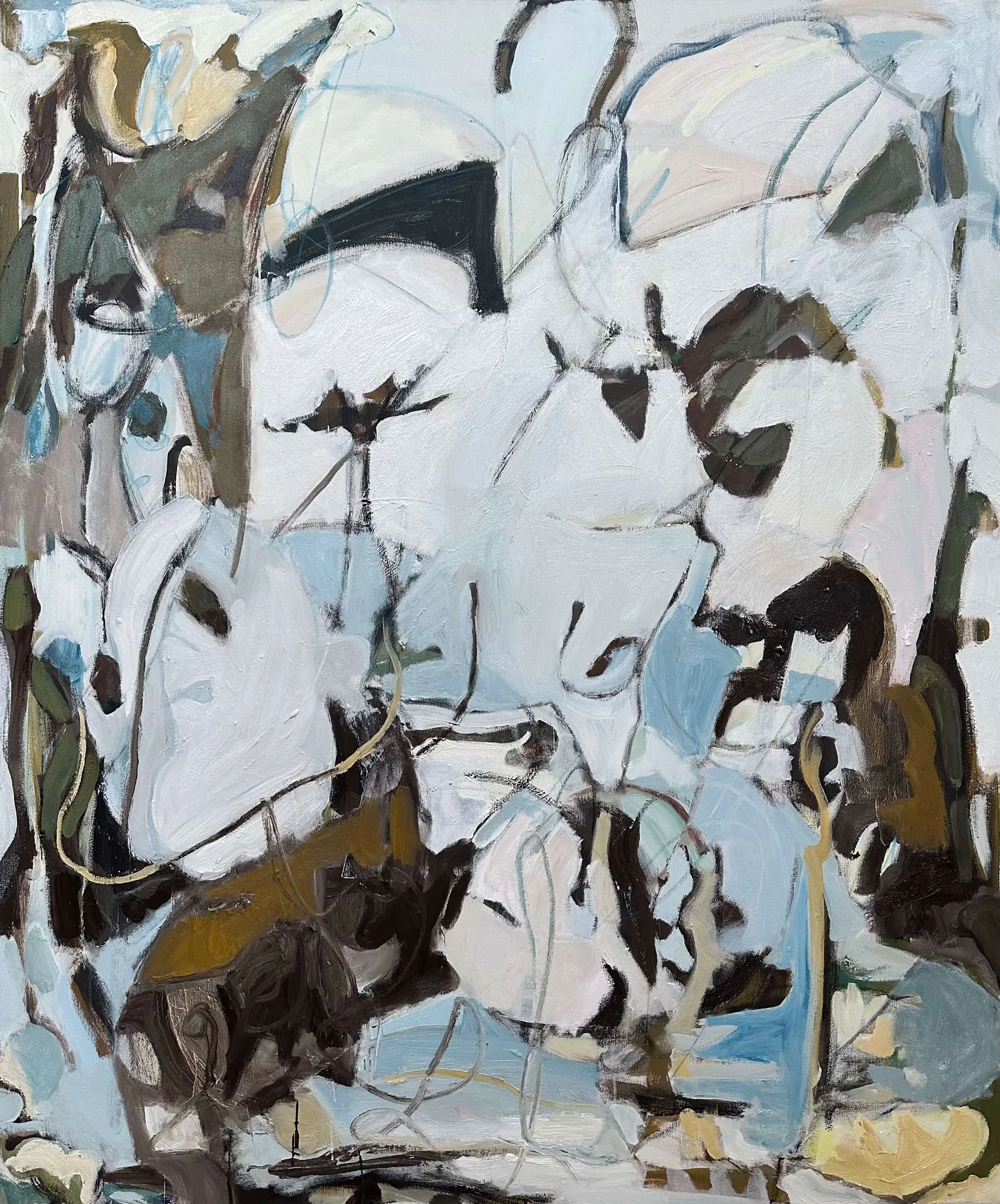
Abstract art can become frustrating when viewers assume a hidden answer must be discovered. The more useful question is not “What is this supposed to be?” but “What is happening here?” That shift turns looking from a test into an experience.
Begin with the physical facts. Notice the size of the work, the materials, the density of the surface, and your distance from it. Does the image ask to be seen all at once, or does it unfold in fragments? Which areas feel fast or slow? Where are edges sharp, blurred, torn, or buried?
Then follow attention itself. Observe where your eye lands and what redirects it. Color may create a path; a line may interrupt that path; an empty passage may offer a pause. These relationships are the grammar of the work. You do not need to translate them into a sentence for them to be meaningful.
Finally, allow association without demanding certainty. A form may remind you of landscape, fabric, weather, a city, or a personal memory. Another viewer may experience something different. Abstraction remains generous precisely because it can hold these responses while preserving its independence. Looking becomes a collaboration rather than a search for the correct label.