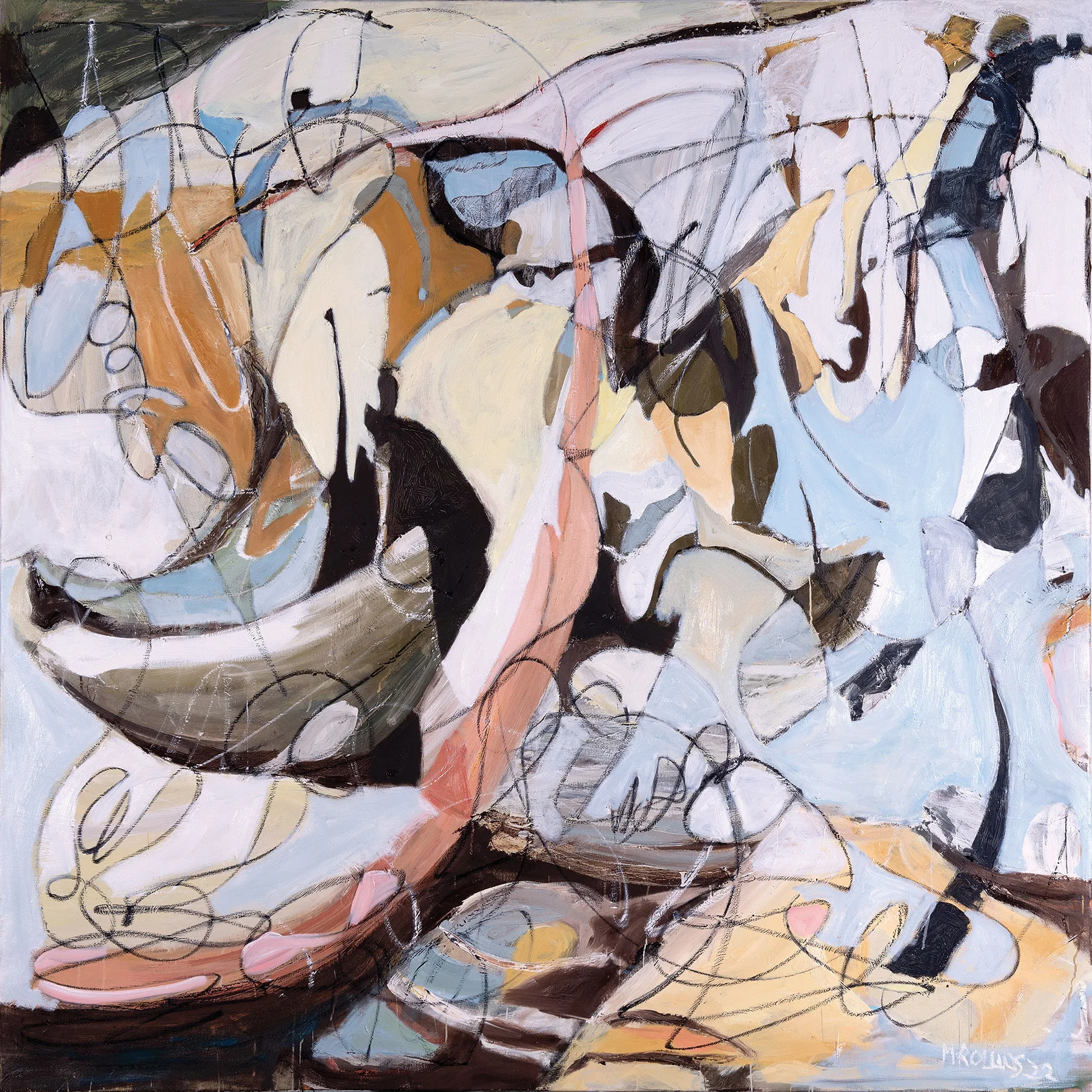
A painting photographed head on can be easy to read as an arrangement of color and hard to read as a surface. In person, take a step to one side. A brush ridge that disappeared into a field of similar color might catch the light. A glossy patch may brighten while the matte paint immediately beside it stays dark.
Return to your original position and see whether you can still locate those differences. You may find that the same patch belongs to a broad field when you face the picture and breaks away from it when you move. The painting has acquired a second rhythm, one that becomes visible through the movement of the viewer.