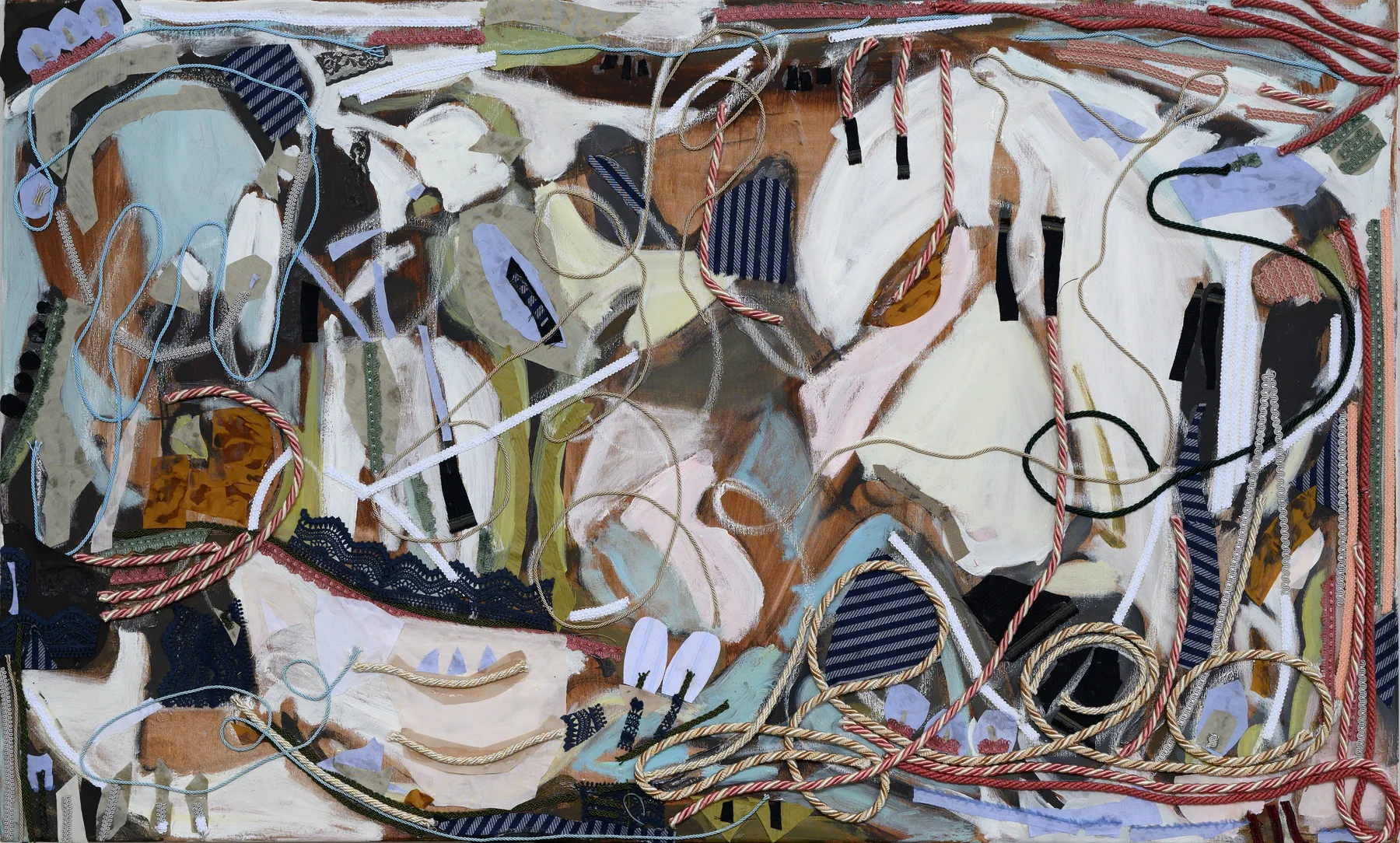
Viewers may feel uncertain about abstract imagery while recognizing its materials immediately. Paper recalls handling and folding; cloth suggests weight and touch; a dark rubbed mark carries the memory of friction. Such associations provide points of entry without requiring the work to illustrate an identifiable scene.
This recognition is shared but not identical. A fabric can call up different experiences for different viewers, and its place in an artwork changes those associations again. The material does not deliver one message. It establishes a conversation between physical qualities, cultural habits, and individual memory.
Name the materials you can actually see before considering what they suggest. Then separate observation from association: a frayed edge is visible, while a feeling of vulnerability is an interpretation. Keeping both in view makes the encounter richer. Material offers common ground from which different readings can develop.