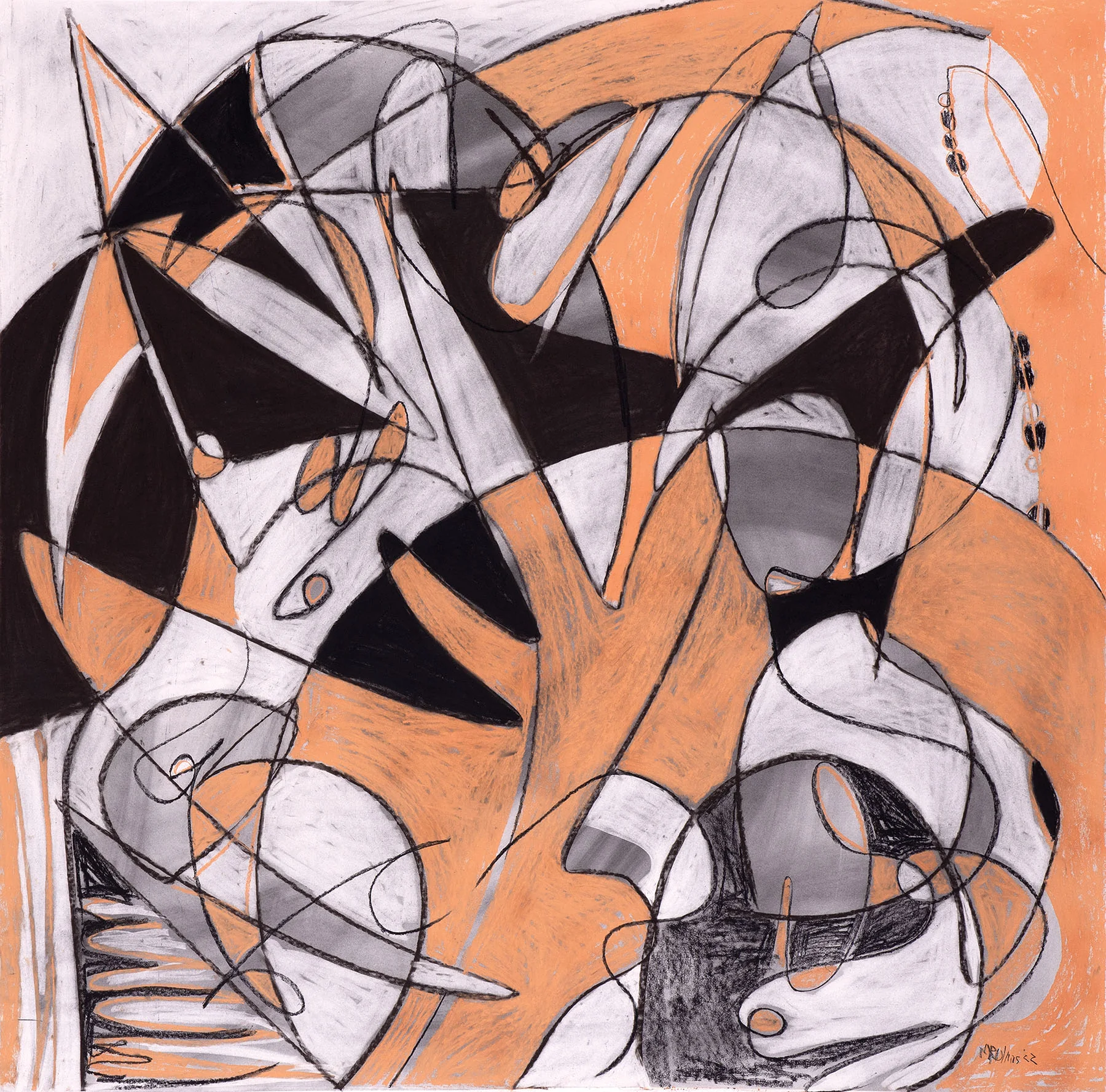
Negative space is often described as the area around a subject, but in strong compositions it is never merely leftover. An open passage can hold light, establish distance, slow the eye, or place pressure on the forms that surround it.
In drawing, untouched paper can become luminous against charcoal. In painting, a thinly worked field may reveal the ground and preserve a sense of air. In collage, a gap between fragments can be as decisive as the fragments themselves, creating a pause that keeps them from collapsing into one mass.
The power of empty space depends on proportion and placement. A narrow interval may feel tense; a broad one may produce release or isolation. When open and dense areas alternate, the composition acquires rhythm much like music shaped by sound and silence.
Try looking first at what appears absent. Follow the open areas across the work and notice how they connect or separate its active zones. The pause is not outside the image's meaning. It is one of the forces that makes meaning possible.