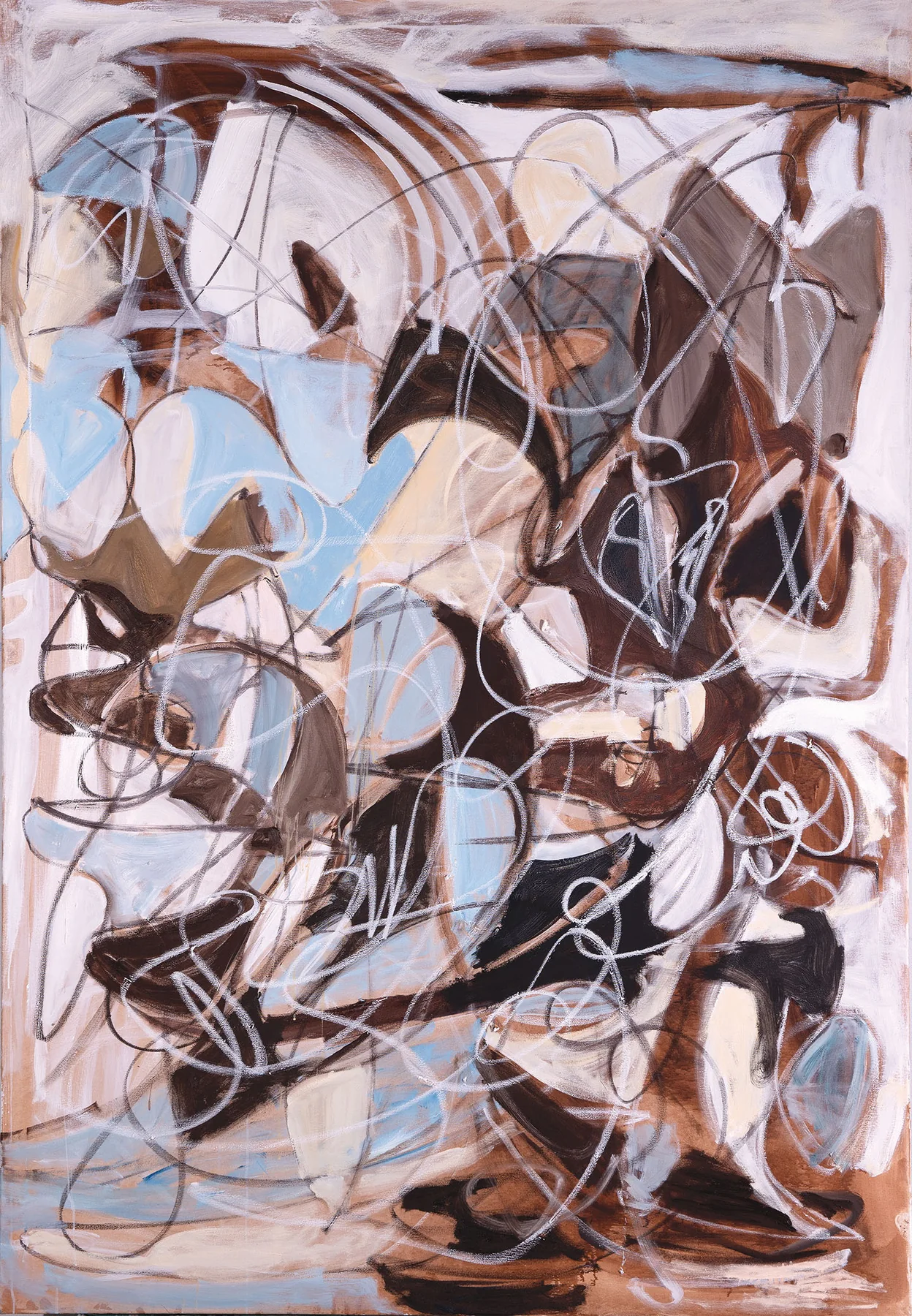
Follow a brushstroke from its broadest area to its thinnest. Near one end, paint may collect in a rounded deposit. Farther along, separate bristle marks can reveal the color underneath. The difference gives the stroke a pace you can follow without knowing which end was made first.
A narrow tail might read as a quick release, while a heavy turn may seem to take longer. These are impressions supported by the visible mark. A surrounding patch can amplify them by giving the stroke room to run or by interrupting it with a hard boundary. The painting preserves enough of the action for the eye to imagine its rhythm.