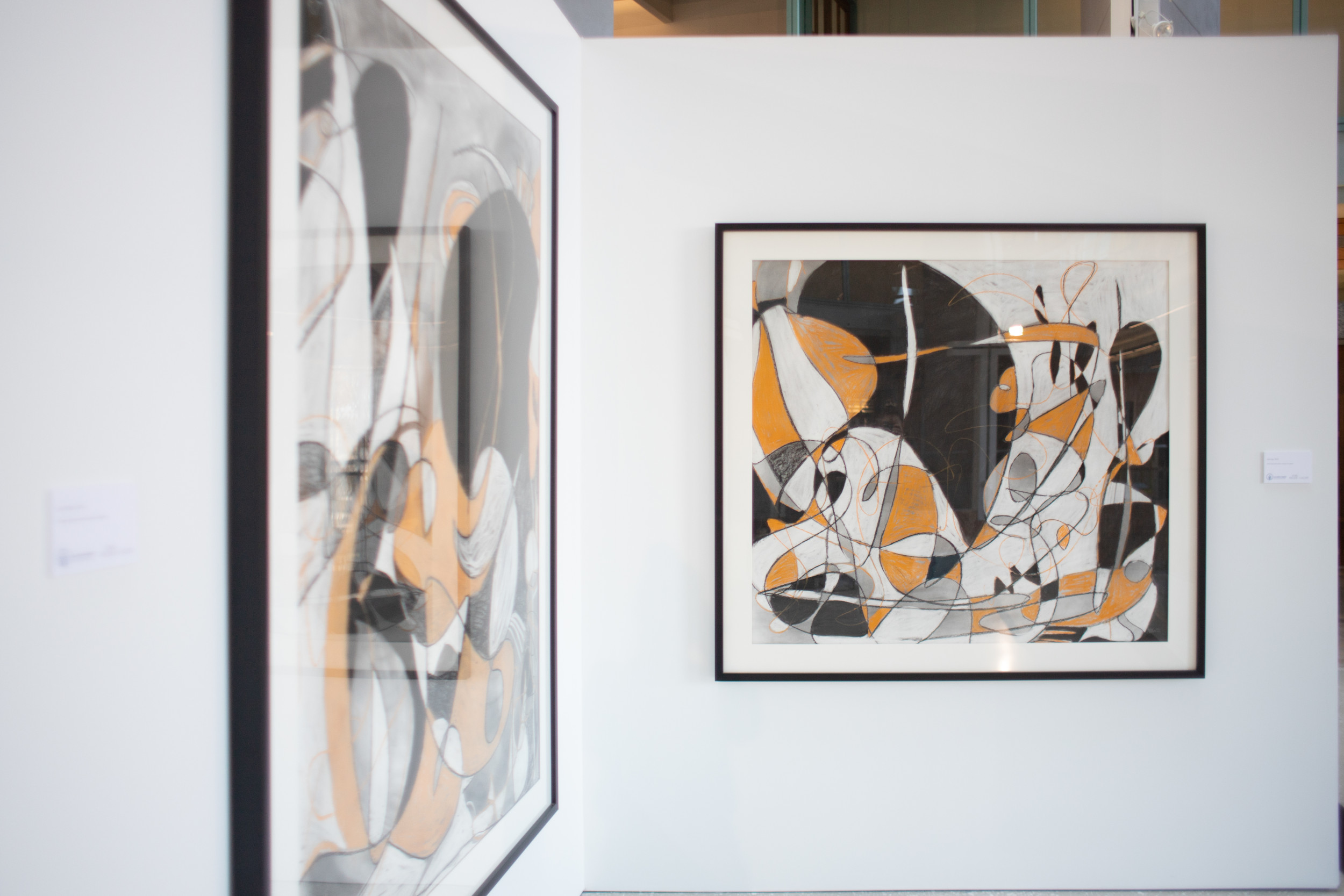
A painting changes when it enters a building. Its color responds to ambient light, its scale is measured against doors and bodies, and its composition participates in the movement of people through space. Installation is therefore not simply the final act of hanging; it is an extension of how the work communicates.
Large works can anchor an atrium or interrupt a corridor. Smaller pieces can establish an intimate rhythm when grouped across a wall. Sightlines matter: an artwork glimpsed from another floor creates anticipation, while a work encountered at close range may emphasize material detail. Architecture edits the sequence in which art is understood.
Public, museum, gallery, and domestic installations each produce distinct relationships. A museum supplies historical authority, a gallery concentrates attention, a workplace introduces art into daily routine, and a home places it within private memory. The artwork remains itself, but its social role changes.
Installation photography preserves these temporary encounters. It records not only the object but the proportions, surfaces, shadows, and cultural setting around it. For artists working at architectural scale, these images are essential evidence of how a work occupies the world beyond the studio.