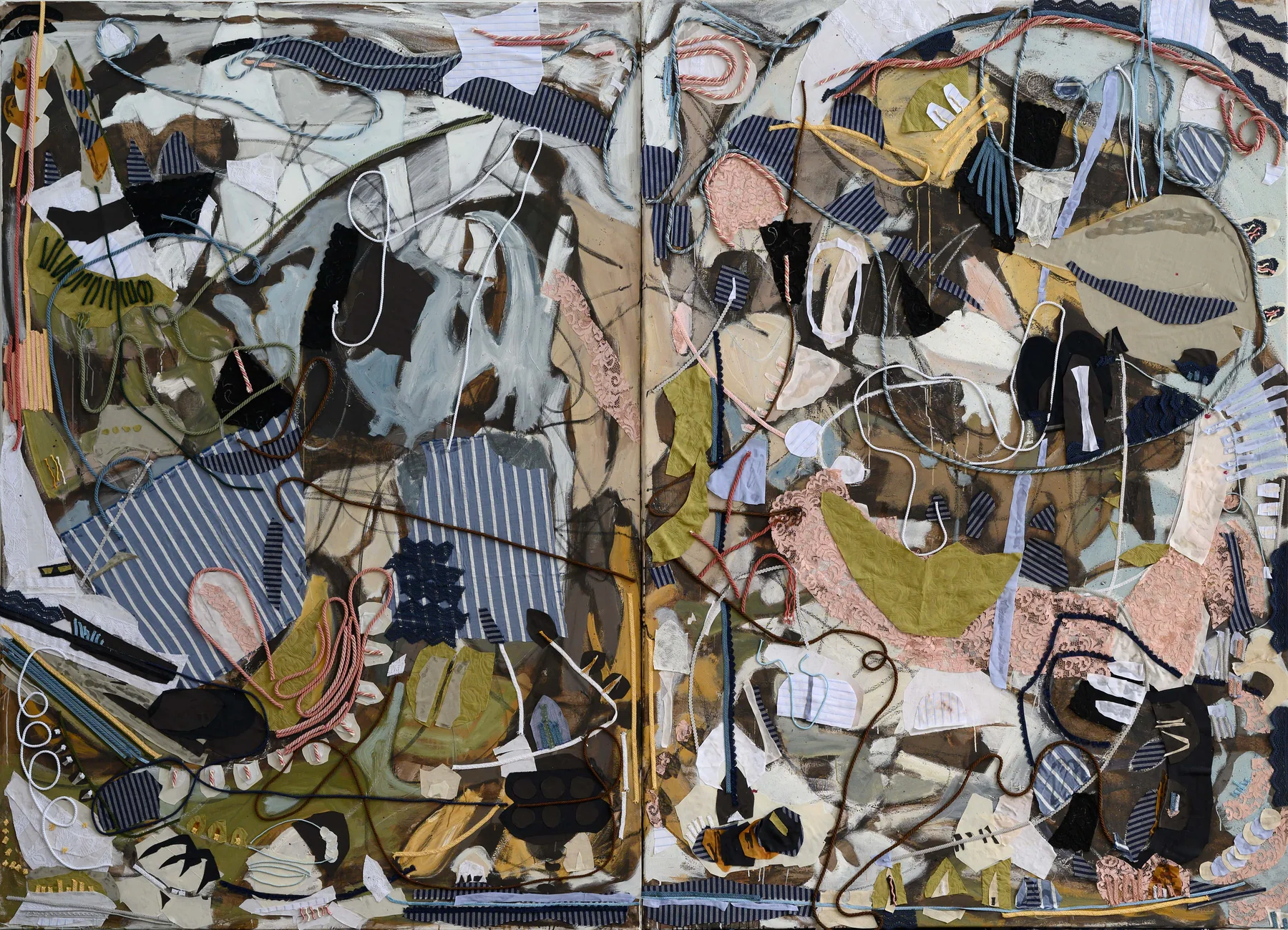
A repeated shape establishes an expectation. Once the eye senses a pattern, it begins to anticipate the next interval. An interruption makes that expectation visible. A missing element, an uneven gap, or a sudden shift in scale can turn repetition from background information into an active event.
Fabric and collage offer particular opportunities for this tension. A printed motif may meet a cut edge that refuses its rhythm. A painted gesture may cross a regular weave. Neither system disappears; each becomes more noticeable because it has encountered something with a different pace and logic.
Look for a repeated element and count only until the pattern changes. Then consider how the change affects the whole. Does it create relief, friction, humor, or unease? Repetition provides continuity, but deviation gives the viewer a reason to remain alert. The work gains character through the negotiation between the two.