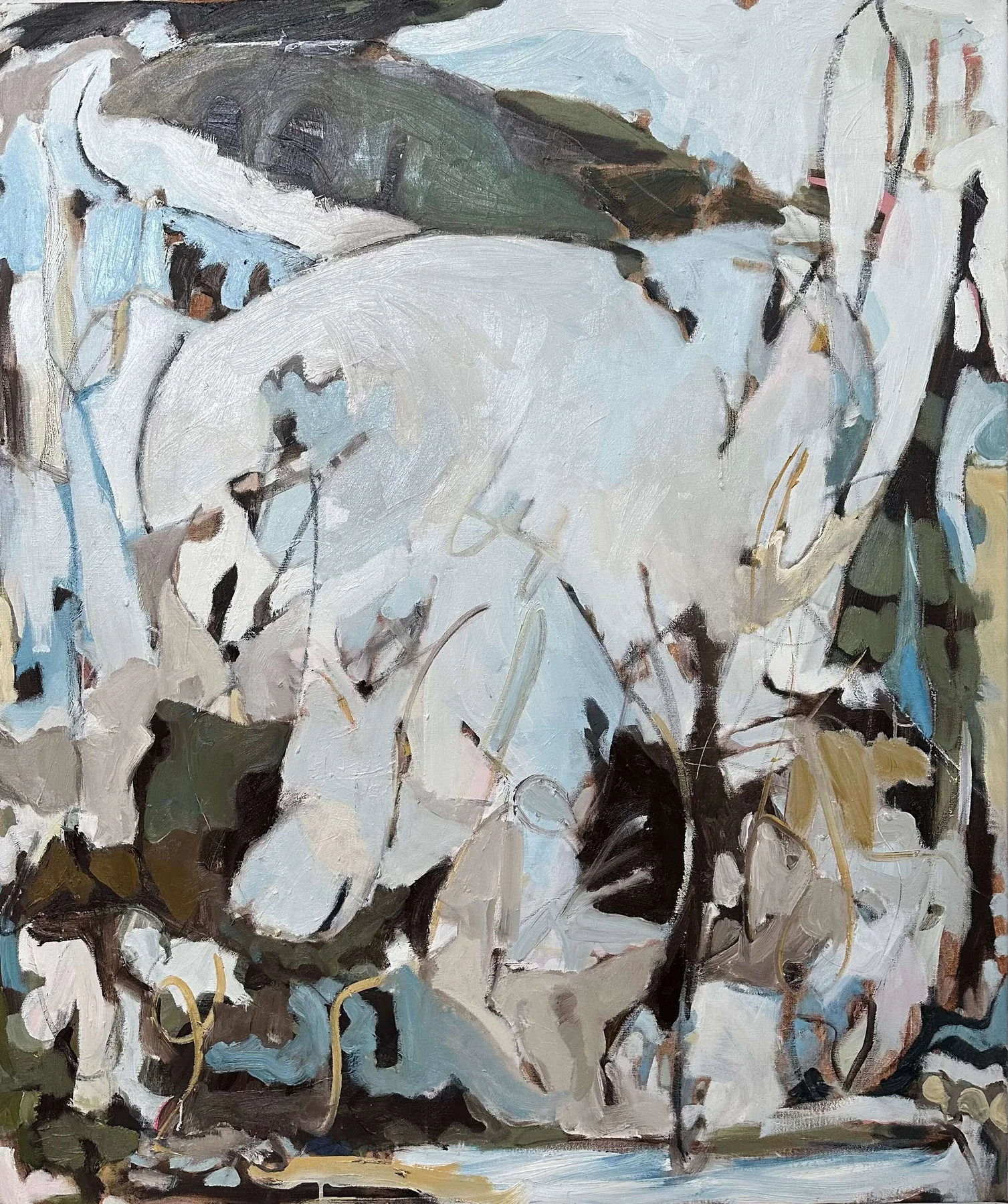
We often approach a painting by looking at its center or its brightest passage. Beginning at a corner changes that habit. It brings small transitions into view before the dominant gesture takes control. The margin can reveal how the image enters its boundaries and how much energy seems to continue beyond them.
A corner may contain exposed ground, a clipped form, or a quiet change in texture. Such passages establish the relationship between the artwork as an object and the space it suggests. A cropped shape can imply continuation; an unworked interval can make the painted field feel held within the support.
Begin at each corner in turn and follow the route it proposes. You may discover four different introductions to the same work. This is not a method for finding a concealed message. It is a way to interrupt automatic looking and to notice decisions that the most immediately compelling area can overshadow.