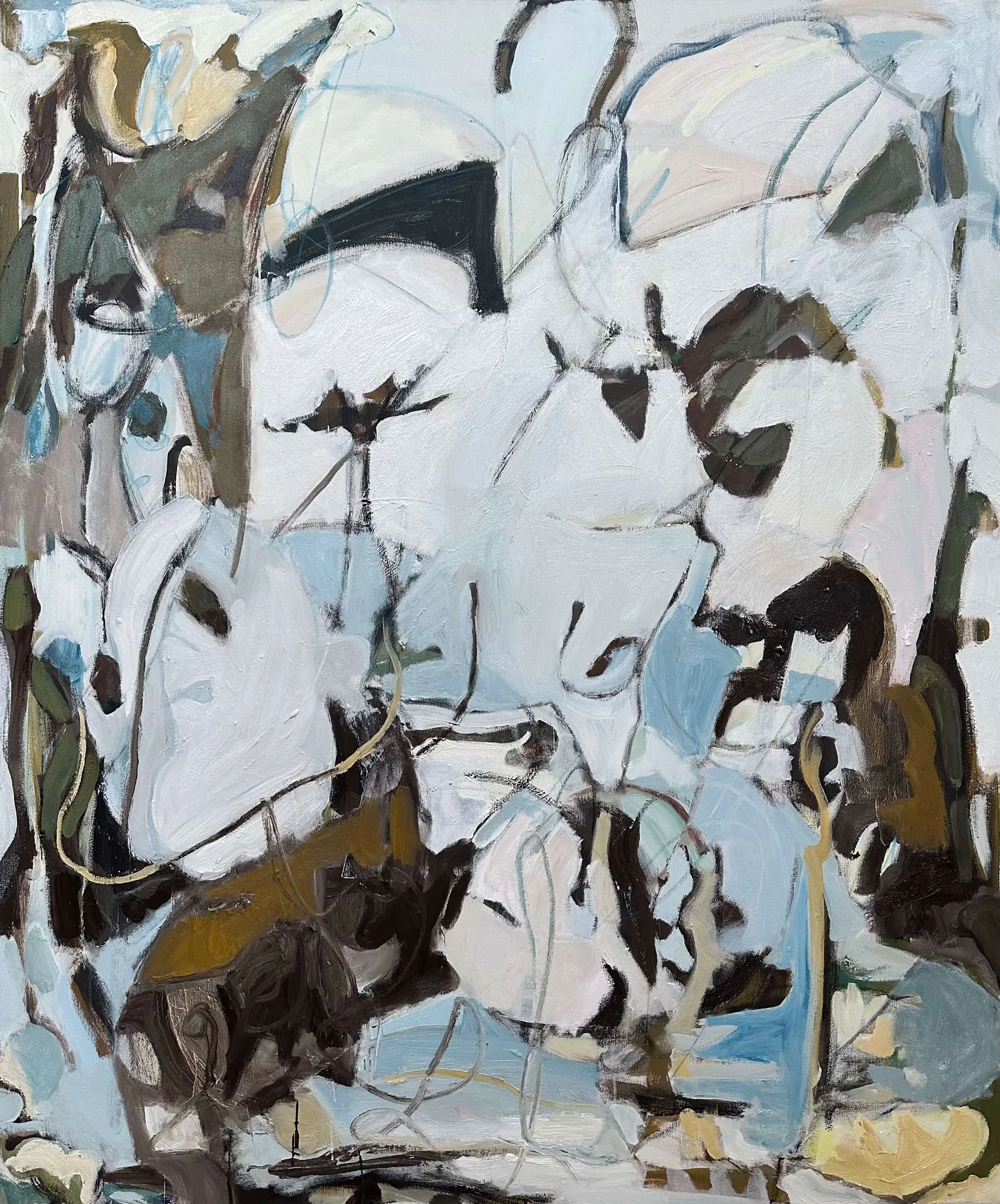
The first encounter with an artwork is shaped by surprise. Later encounters have a different advantage: familiarity reduces the need to grasp everything at once. A viewer can begin to notice a modest edge, a delayed rhythm, or an unresolved transition that the first impression passed over.
Return also brings change from outside the work. Mood, memory, and the surrounding environment influence what feels significant. A painting that once seemed fast may later feel carefully restrained. This does not mean any response is equally persuasive; useful interpretation still returns to what is visibly present.
On a second visit, begin by recalling one detail and then checking it against the surface. Was it as large, dark, or central as you remembered? The difference between memory and observation can reopen attention. Familiarity becomes valuable when it supports renewed looking rather than the assumption that the work has already been understood.