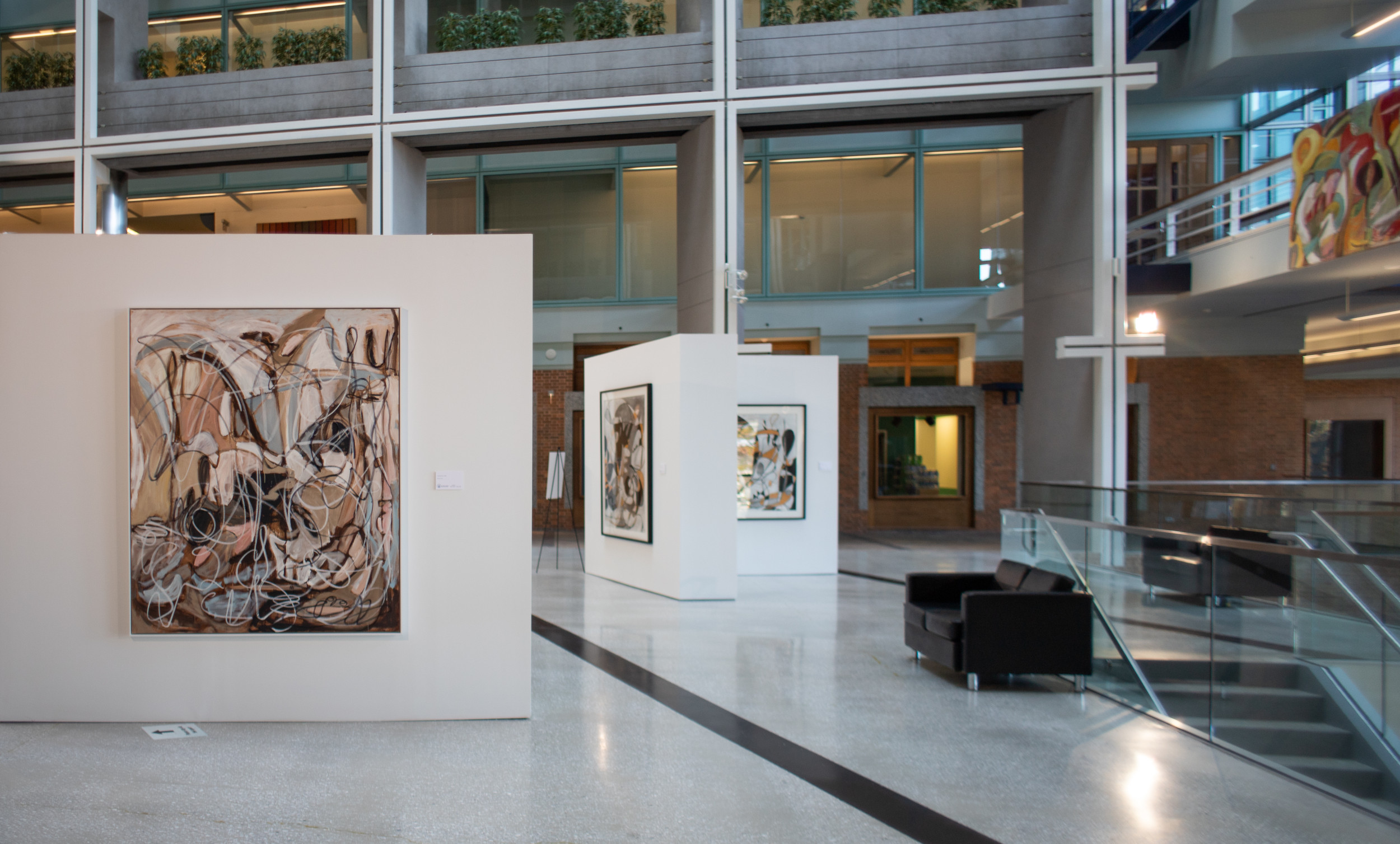
Scale is never only a measurement. A large painting can exceed the viewer's field of vision and transform looking into a physical movement. A small drawing can pull the body close, creating a private zone of concentration. In both cases, dimensions choreograph the encounter.
Monumental work often produces an architectural effect. Color becomes an environment, gestures register as bodily events, and details reveal themselves only as the viewer moves. The whole cannot be held at the same distance as the surface, so perception alternates between immersion and overview.
Intimate scale produces a different kind of intensity. A modest sheet of paper makes pressure, erasure, and hesitation unusually visible. The viewer becomes aware of the hand and of the limited space in which every mark must negotiate with every other mark.
To understand scale, notice what the artwork asks your body to do. Does it make you step back, lean in, look upward, or walk along its edge? These movements are not incidental. They are part of the work's language and part of the memory it leaves behind.