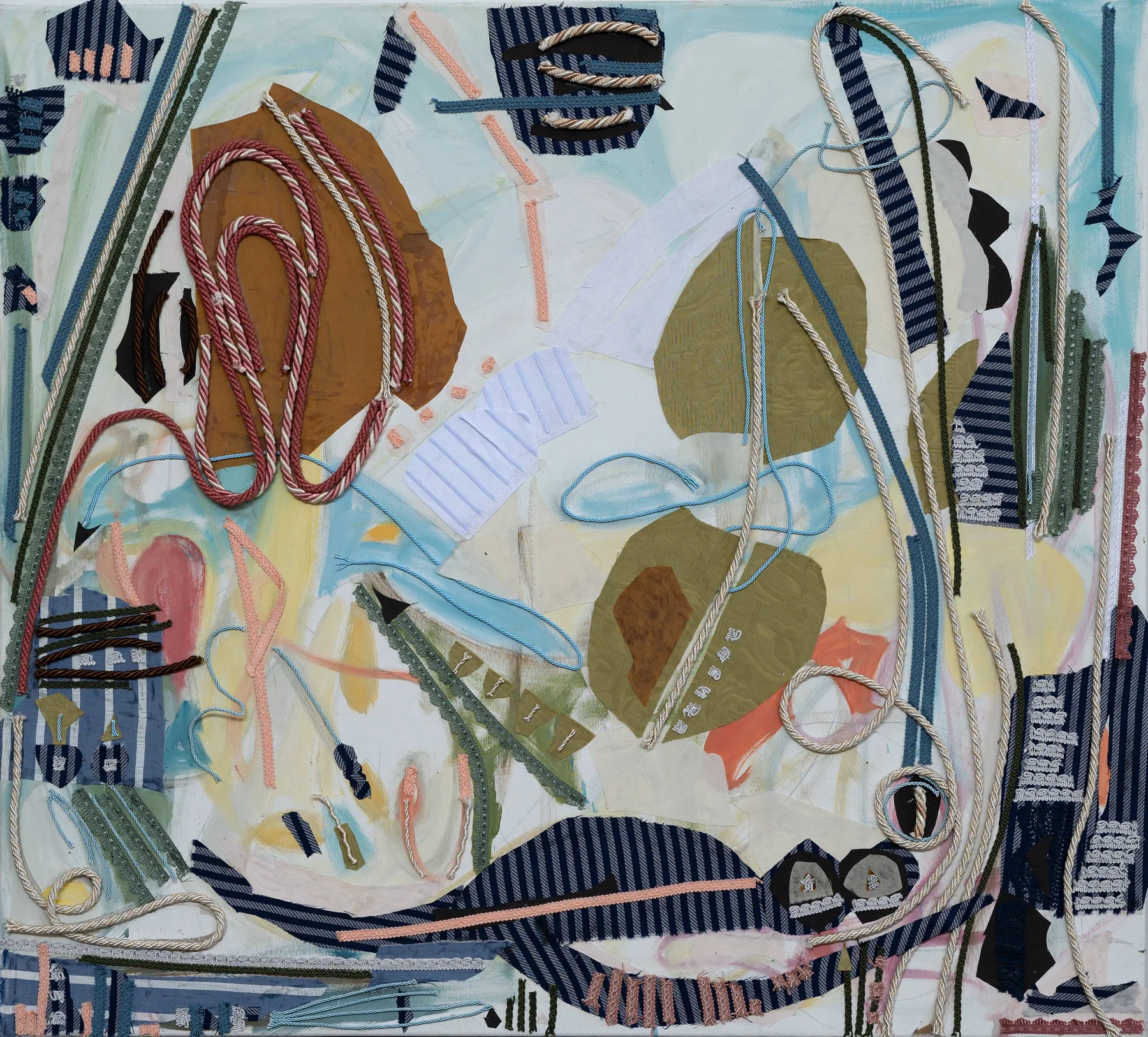
Softness describes a material quality, but it does not determine the character of a composition. Fabric can be pulled taut, compressed into a ridge, cut into a firm shape, or layered into a dense field. Its flexibility makes many kinds of structure possible, including ones that suggest strength and resistance.
In a fabric painting, the viewer encounters both the outline of the attached material and its internal behavior. A fold changes how a shape catches light. A seam introduces a second rhythm within the larger arrangement. These details keep geometry from becoming entirely abstract: the material insists on its weight and construction.
Look for the point where a soft material appears to support or oppose another element. Does it hold the composition together, interrupt it, or pull it toward the edge? The answer may complicate familiar associations between softness and fragility. A pliable surface can be visually forceful precisely because it remains capable of change.