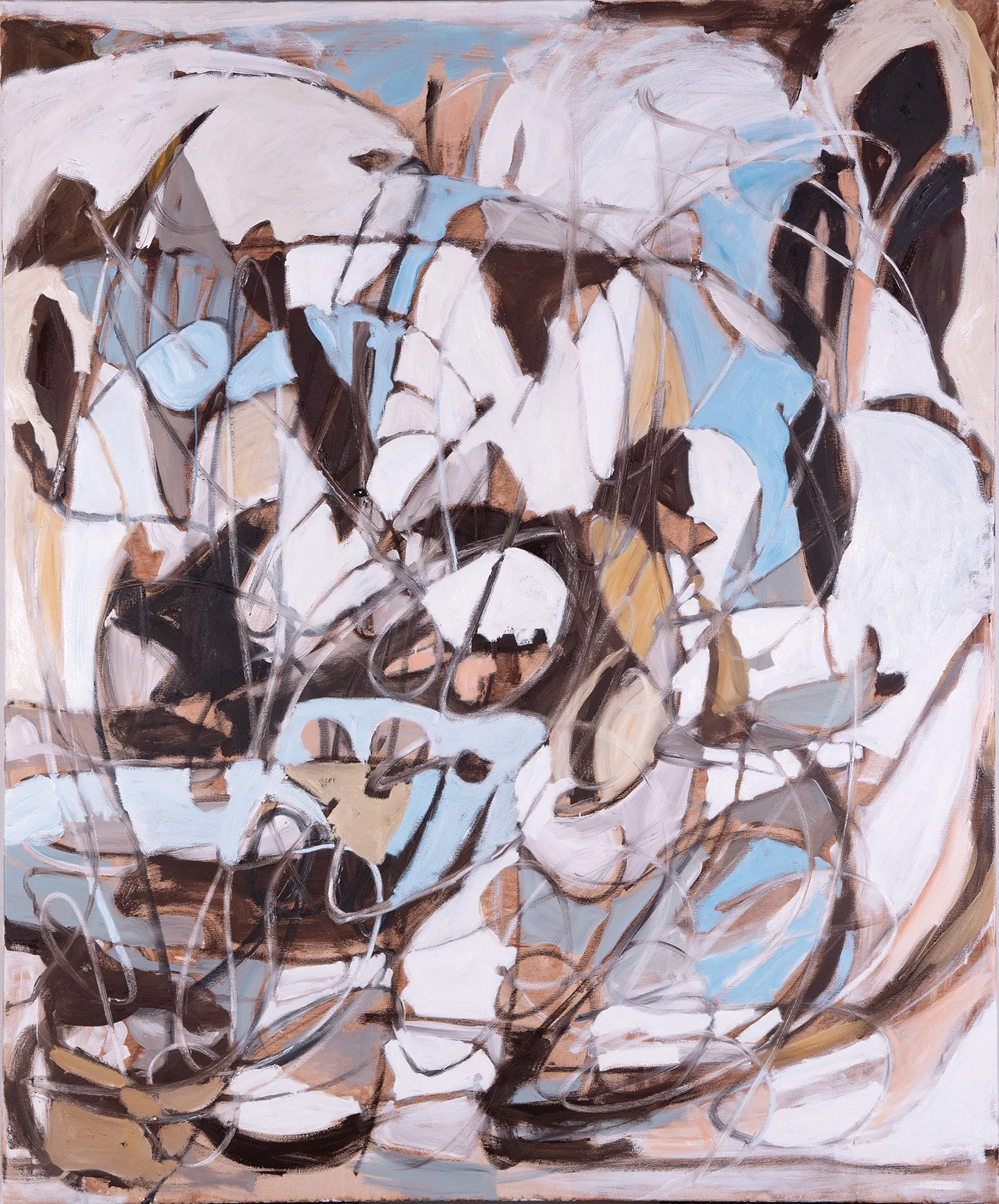
Continuous attention is not always the same as clear attention. After a long encounter, a viewer can become accustomed to a dominant shape or an unresolved passage. A pause interrupts that familiarity. Returning later may reveal that the area once treated as secondary carries more weight than expected.
In thinking about studio process, the pause offers an alternative to the idea that every problem is solved by adding something. A surface may need another mark, but it may also need to be seen differently. Distance in time can clarify a relationship that activity has temporarily concealed.
Try leaving a work after several minutes and returning without immediately recalling your earlier description. Notice what catches your eye now. The shift does not invalidate the first encounter. It shows that attention has rhythms of its own, and that a productive relationship with art can include moments of withdrawal as well as concentration.