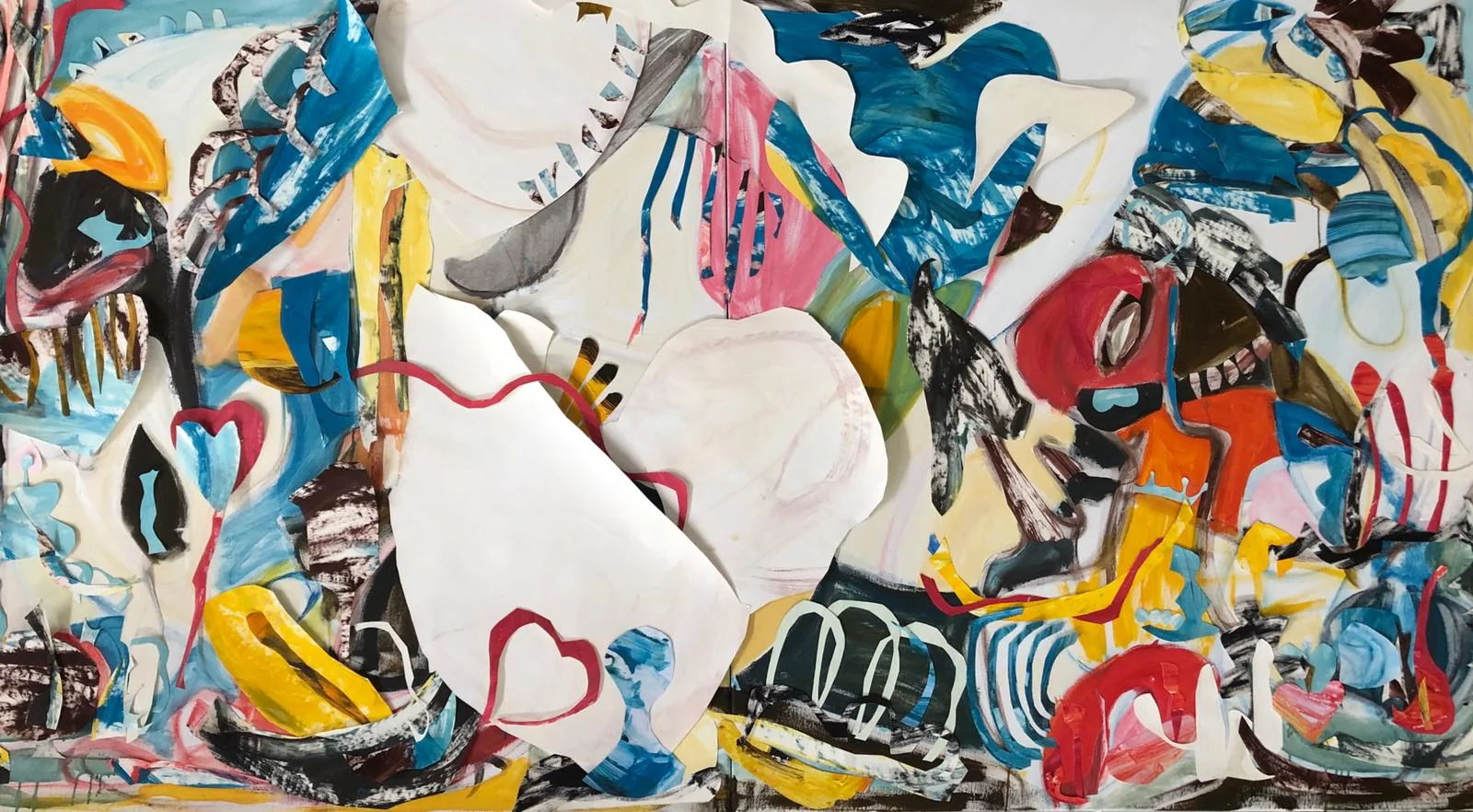
Roughness can be mistaken for a lack of intention. Torn paper, uneven pigment, or exposed fibers may appear casual beside a smooth, polished surface. Yet irregular materials create demanding compositional decisions. Their edges, densities, and textures must be considered as actively as any painted contour.
A rough passage can establish contrast, redirect a gesture, or hold light differently from a smooth one. Its irregularity need not be corrected to become meaningful. The work may depend on allowing the material to retain qualities that cannot be reduced to a perfectly controlled outline.
Look at how a rough area meets its surroundings. Does its scale repeat elsewhere? Does a nearby quiet passage give it emphasis? These relationships help distinguish material immediacy from simple visual confusion. A surface can preserve friction and unpredictability while remaining precise about where those qualities matter.