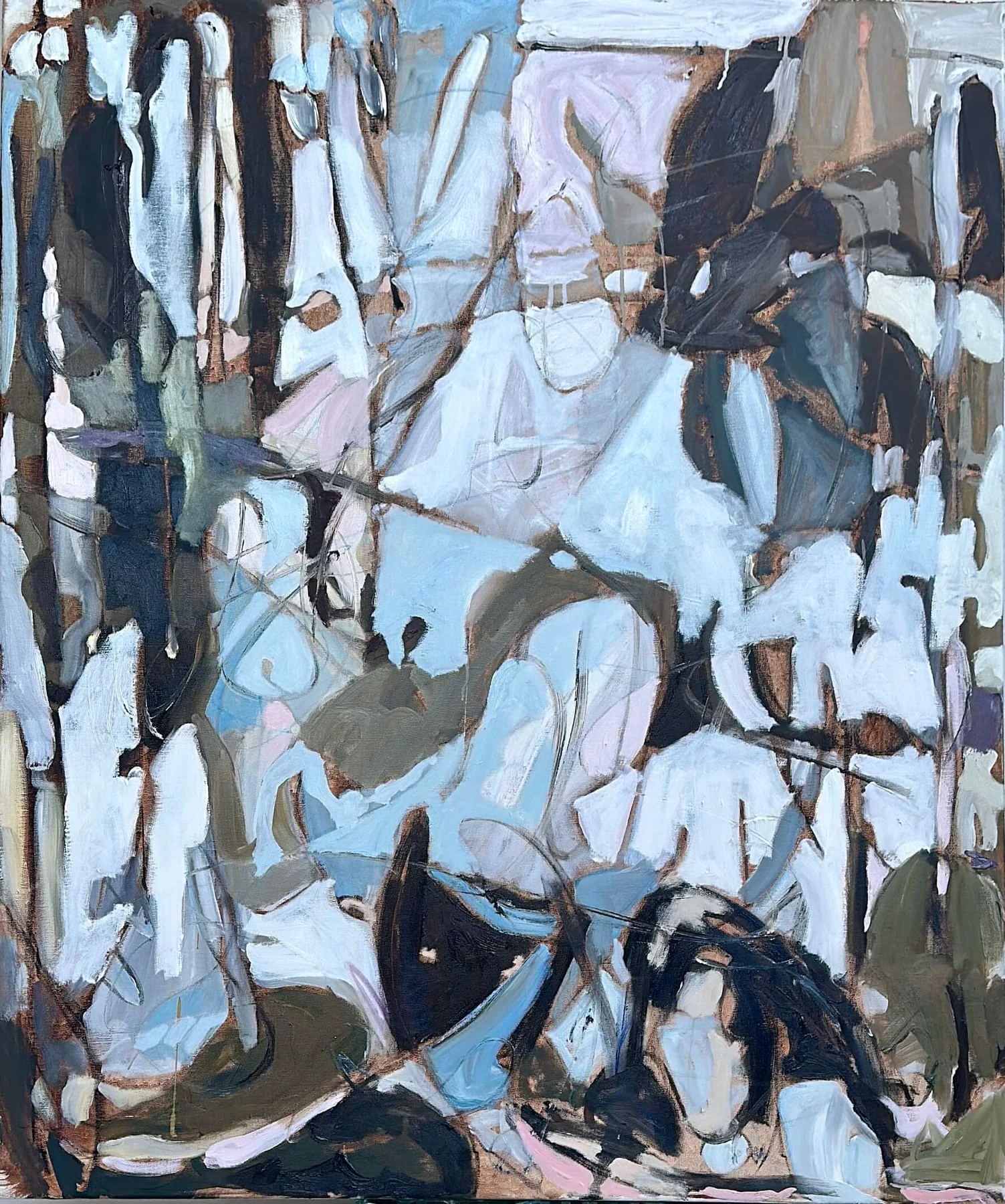
A ground is more than a neutral beginning. Its color and texture can continue to influence later marks, whether it is openly visible or only glimpsed through thin passages. The surface acquires coherence partly through this underlying condition, which gives otherwise different areas something to share.
Where the ground remains exposed, it can act as a pause or a source of light. Where it is covered, it may still affect the apparent warmth and depth of the paint above it. These relationships make the beginning of a work difficult to separate cleanly from its finished appearance.
Look for a small exposed area and compare it with nearby layered passages. Does it seem to sit behind the image, or does it advance into the same visual space as the marks? The ground can alternate between support and active participant, reminding us that a painting is built through relationships that begin before its most visible gestures.