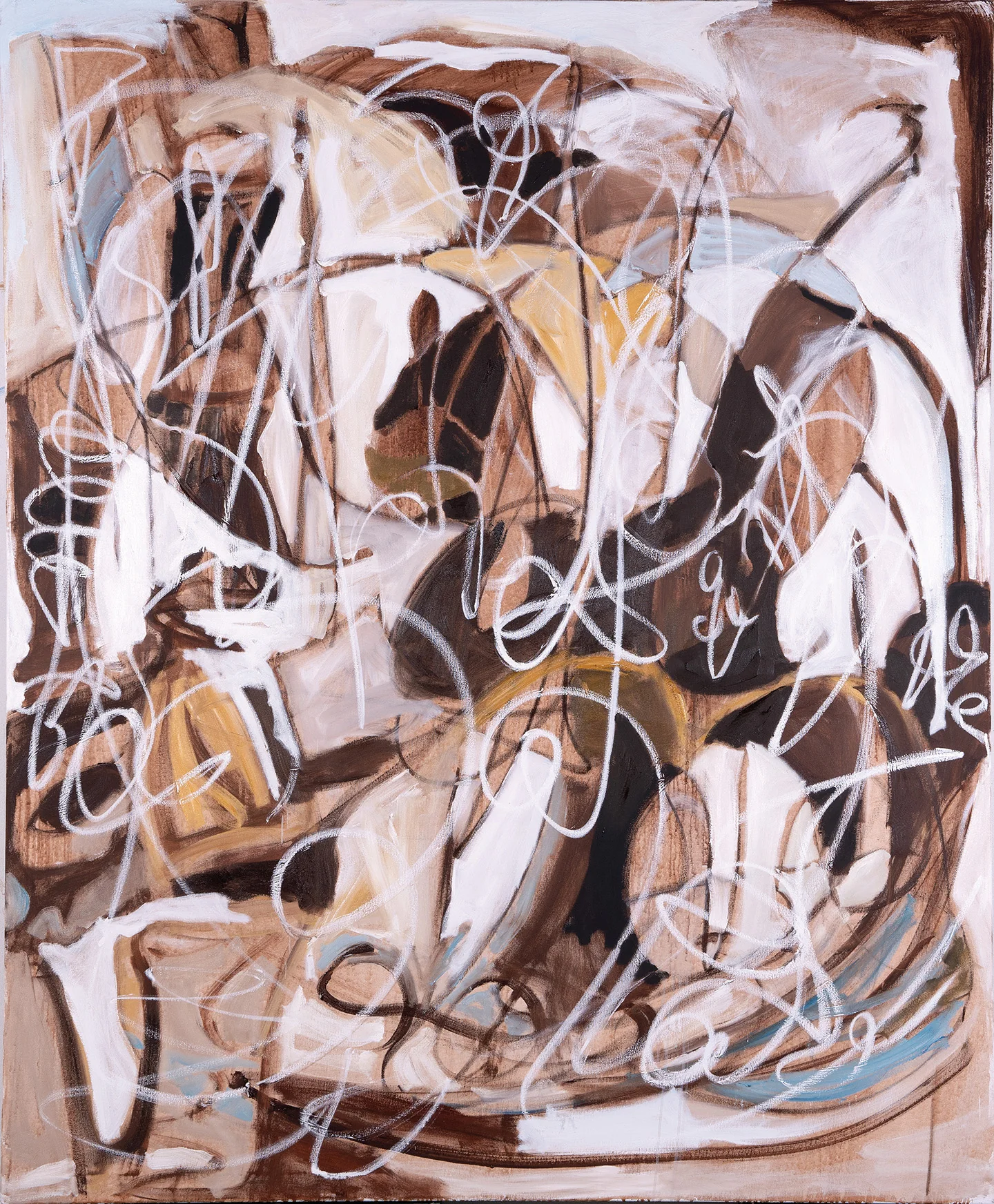
A transparent layer changes what lies beneath without fully removing it from view. It can warm a cool passage, soften a contrast, or connect separate marks under a common atmosphere. The earlier surface remains present, but it is now encountered through another decision. Painting becomes an arrangement of simultaneous times.
Transparency also introduces uncertainty about depth. A color may appear close because it is intense, even while its edges suggest that it belongs below another layer. These competing signals give a flat surface an unsettled spatial character. The eye moves between what it can identify and what it can only infer.
To look closely, find a place where one mark passes beneath another. Ask what the upper layer preserves and what it changes. The interest is often neither complete concealment nor complete exposure, but the interval between them. A painting can acknowledge its past while continuing to transform it.