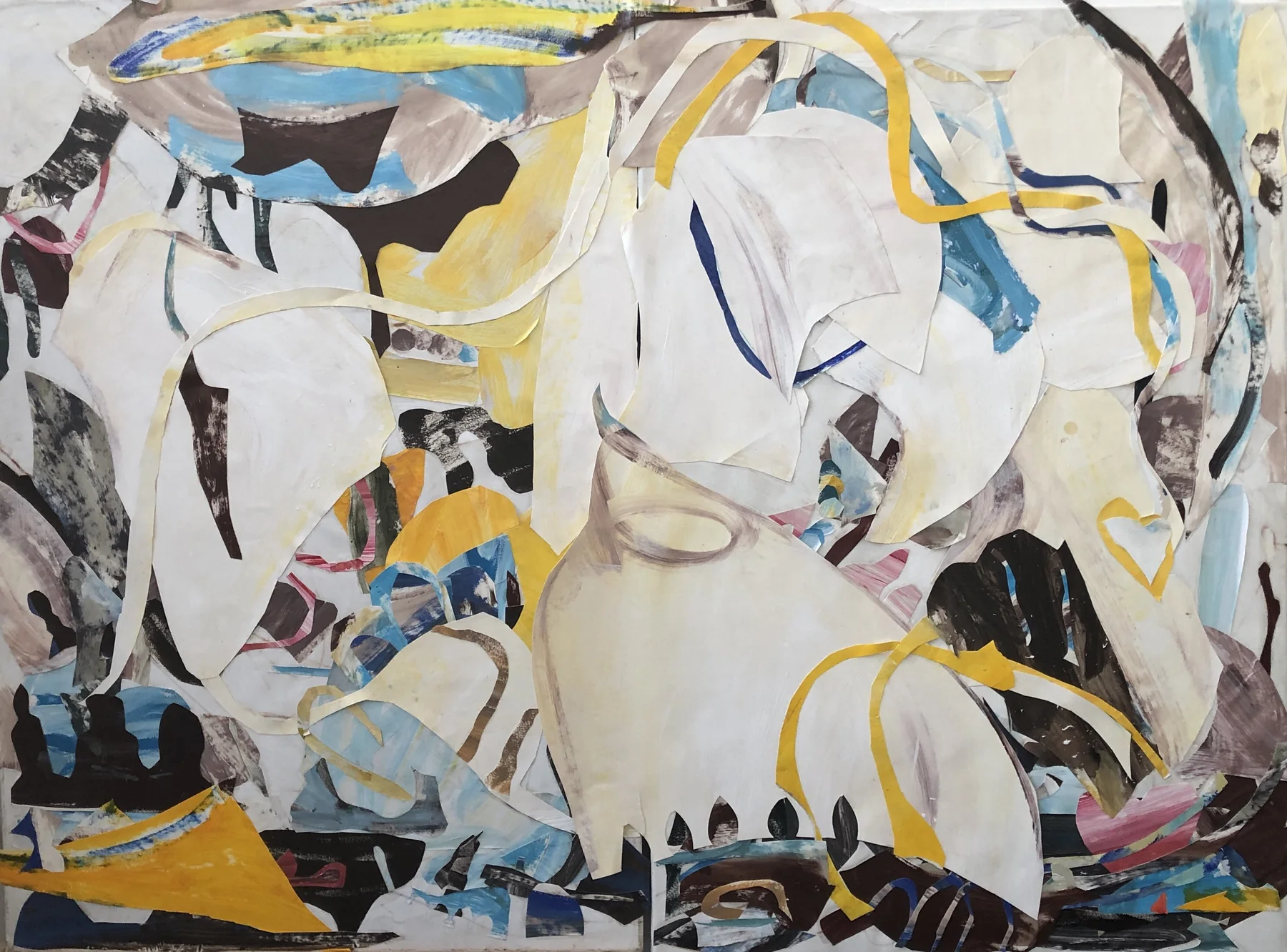
Venetian Renaissance painting is celebrated for color that seems to emerge from within the surface. Artists built complex flesh, fabric, atmosphere, and light through layered applications of pigment. Color was not simply contained by drawing; it generated volume, mood, and spiritual intensity.
That history remains relevant to contemporary abstraction. A modern artist may abandon recognizable figures while retaining the Venetian belief that color can carry meaning through its material presence. Transparent veils, saturated passages, warm grounds, and unexpected chromatic transitions can make an abstract surface feel illuminated rather than merely coated.
The relationship between drawing and color is equally important. In the work of Tintoretto, restless lines and dramatic spatial movement coexist with painted layers. Veronese constructed magnificent arrangements through broad zones of modulated color. Contemporary painters can inherit these strategies without imitating their imagery, using gesture and chromatic structure to guide the eye through nonrepresentational space.
Art history is most alive when it functions as a conversation rather than a template. Venetian color offers a vocabulary of luminosity, layering, and visual abundance. Contemporary abstraction answers with new materials, new bodies, and new emotional conditions while continuing the old question of how pigment can make light feel present.