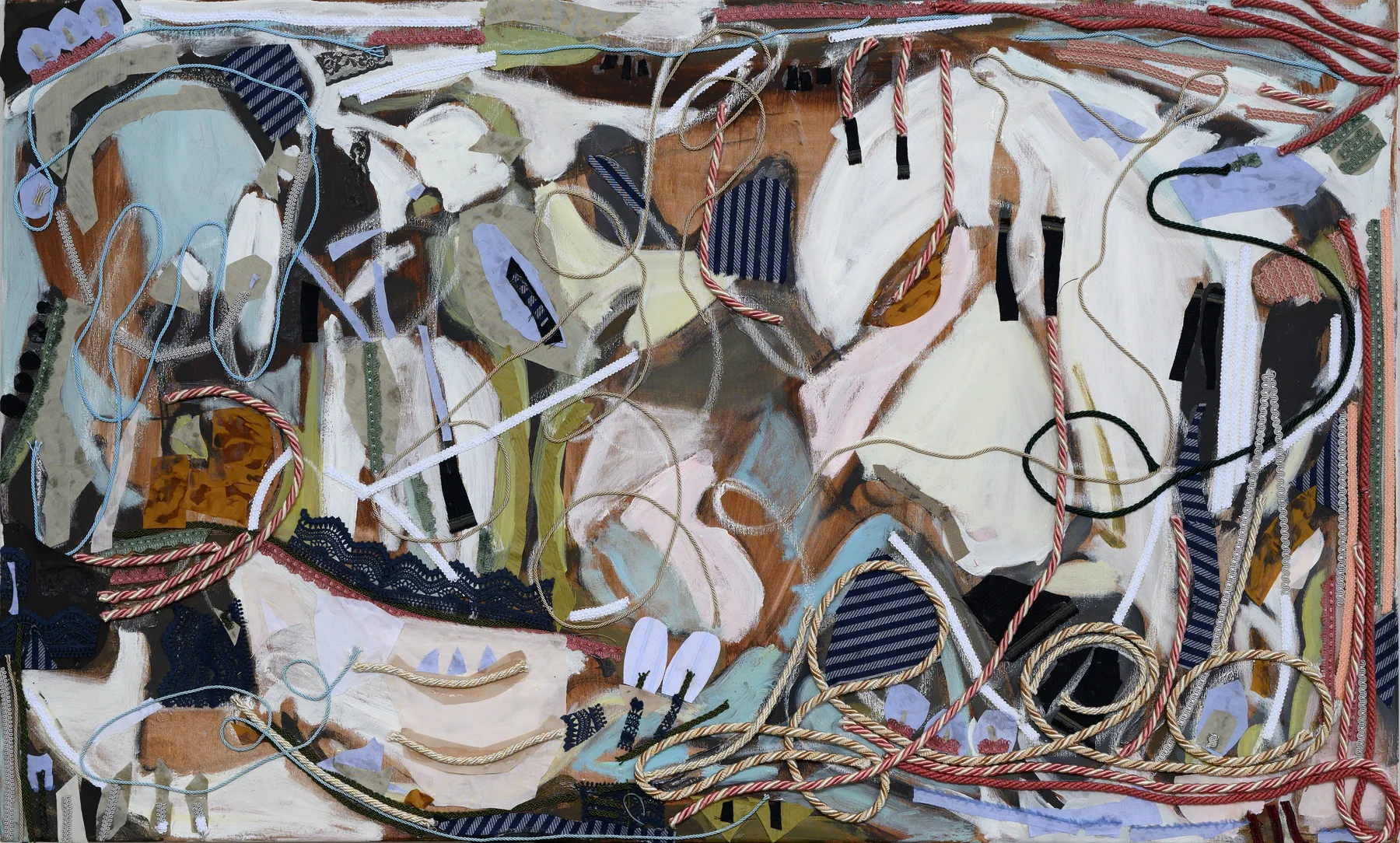
A raised edge produces a shadow that is neither a painted mark nor fully separate from the work. It belongs to the encounter between material and light. In a dimensional surface, this additional layer can shift as illumination changes, introducing a quiet instability into an otherwise fixed arrangement.
Folded cloth, overlapping paper, and projecting elements each establish their own small distances from the support. Shadows make those distances legible. They can intensify an edge or suggest a hidden space underneath it. The object becomes more than its frontal image because its construction participates in what we see.
When viewing a dimensional work, change your position slightly and notice which shadows alter. Follow the difference between a dark pigment and a dark recess. This kind of attention makes material structure visible without requiring touch. The surface reveals how it occupies space through the light it receives and the light it interrupts.